01
Unified coordination queues across care operations
AiLabs Agents · workflow orchestration
ideyaLabs developed a single queue model for referral intake, discharge tasks, and follow-up actions, reducing duplicate work and handoff confusion.




A healthcare provider needed to reduce repetitive, non-clinical workload across coordination and documentation. ideyaLabs delivered software development services powered by AiLabs Agents, helping care teams spend less time in administrative loops and more time in direct patient care.
31%
Less coordination admin time per shift
Queue consolidation and agent-assisted task routing cut repetitive follow-up loops across nursing and care ops.
22%
Reduction in after-hours documentation
Template automation and assistive drafting reduced unfinished charting carried past scheduled clinical hours.
+14 pts
Increase in patient-facing time share
Time-and-motion sampling across comparable teams showed more direct care minutes in the same shift windows.
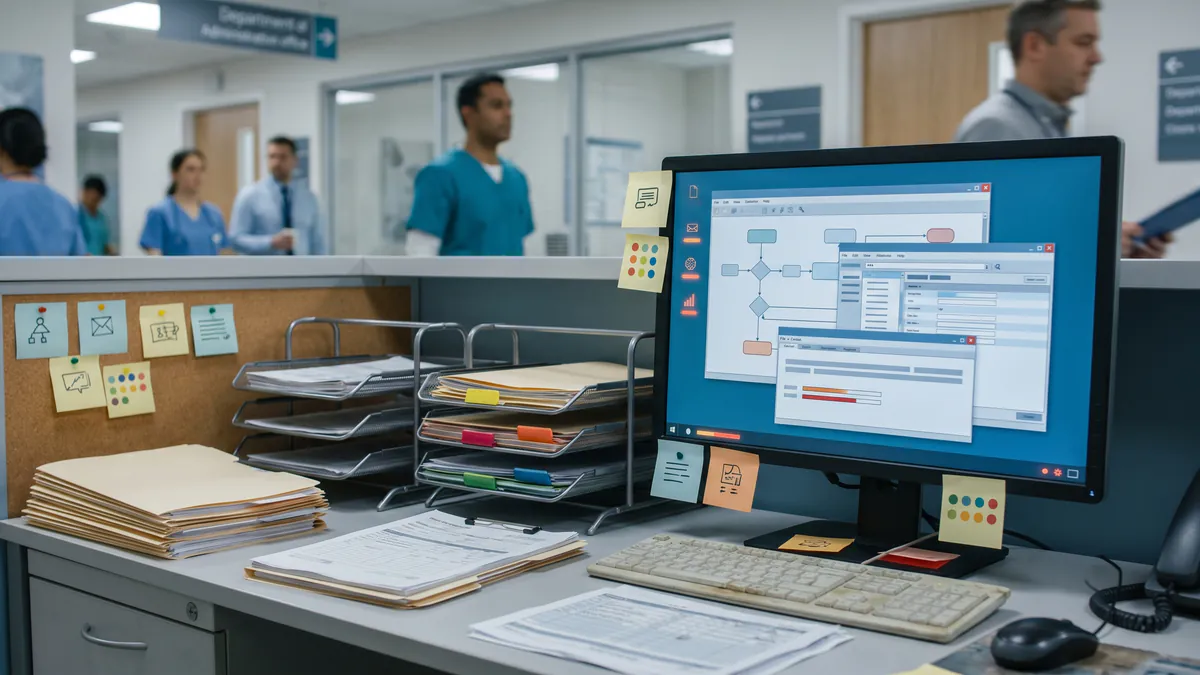
Care teams managed intake, documentation, and follow-up with high diligence, but fragmented workflows created repetitive effort. Routine operational work expanded while clinicians tried to preserve meaningful patient interaction time.
The objective was practical and measurable: develop healthcare software that removed low-value repetition, improved care-team coordination, and protected safety, auditability, and role-based accountability.
ideyaLabs applied AiLabs Agents across software architecture, integrations, and quality engineering. The outcome was a coordinated operating model where agents supported routine tasks and care professionals retained final decision authority.
ideyaLabs developed a single queue model for referral intake, discharge tasks, and follow-up actions, reducing duplicate work and handoff confusion.
Structured drafting and context-aware suggestions accelerated notes while preserving clinician review, edits, and final sign-off.
The platform surfaced queue pressure by role and shift so managers could rebalance work before delays cascaded into patient wait time.
API and event integration reduced copy-paste loops between systems while keeping source-of-truth records and data contracts intact.
Centralized logs, latency tracking, and focused query tuning improved responsiveness on high-traffic coordination workflows.
Regression packs, role-access checks, and controlled rollout phases improved release confidence for operationally sensitive workflows.
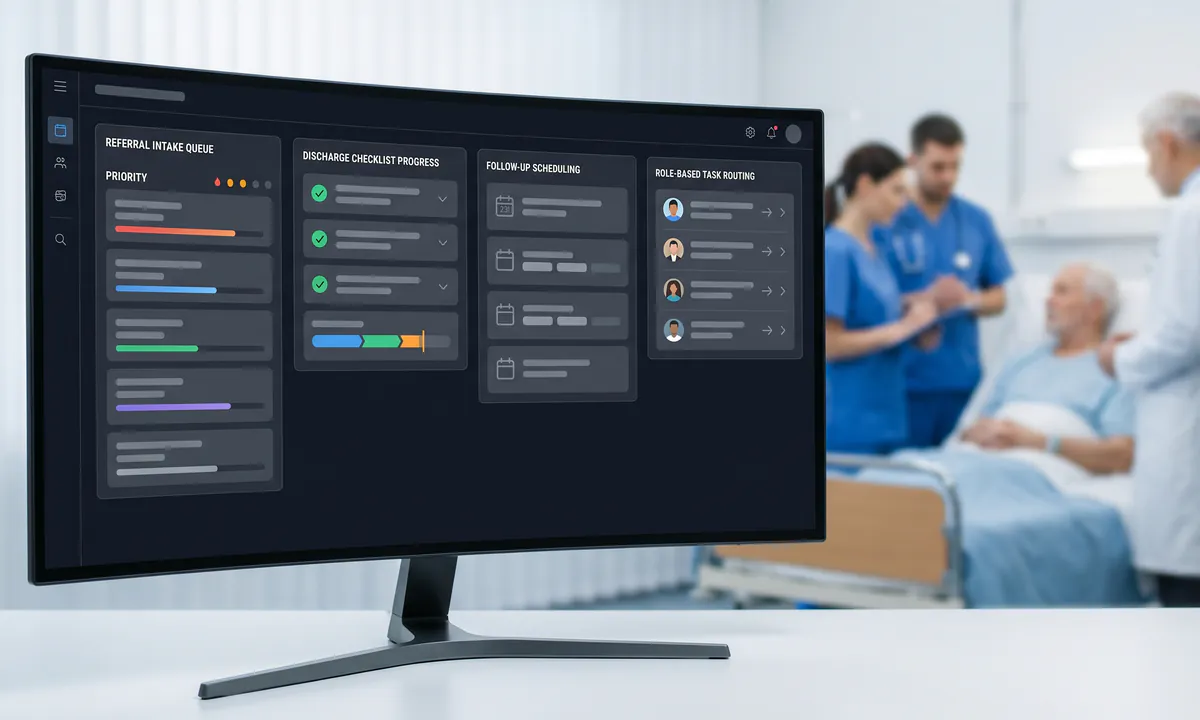
Unified queue views, routing logic, and task states reduced context switching and made bottlenecks easier to resolve. Managers gained timely visibility while clinicians spent more of each shift on patient care rather than repetitive administrative steps.

Results were tracked against operational efficiency and care-time outcomes, ensuring gains were sustainable in daily clinical practice rather than short-term pilot effects.
2.0x
Faster referral-to-action closure
Median completion time improved after consolidated queues, role routing, and notification tuning were introduced.
27%
Drop in repeat handoff touches
Fewer back-and-forth clarifications were needed once handoff context and required fields were standardized.
99.9%
Operational availability target
Monitoring, alerting, and release controls kept core coordination workflows stable during peak periods.
Partner with ideyaLabs and AiLabs Agents to build healthcare software that automates repeatable workflows and helps clinicians dedicate more time to patient care.
Talk to our team