ideyaLabs LogoideyaLabs Logo
Operations control view for linehaul and dispatch coordination
Case study

One clock for publish, field, and invoice

This programme focused on the seams the operations playbook cares about most: when LH publishes, how DIS executes on the street, how inbound and outbound docks prove what moved, and how BIL settles with TTSL and P&R still attached to the same facts. AiLabs Agents from ideyaLabs tightened tests, integrations, and rollout so those handoffs stopped drifting apart.

60%

Fewer status bridges

Planners stopped bridging LH publish state to DIS and the yard through chats once trips, seals, and doors lived in one stream.

Faster publish-to-yard

Load boards and outbound door plans reflected the same publication order carriers saw—without overnight spreadsheet merges.

35%

Fewer billing rework loops

BIL saw fewer duplicate PROs and missing accessorial paths when DIS and OB scans fed the same identifiers TTSL and P&R already used.


Execution and revenue were running on different clocks

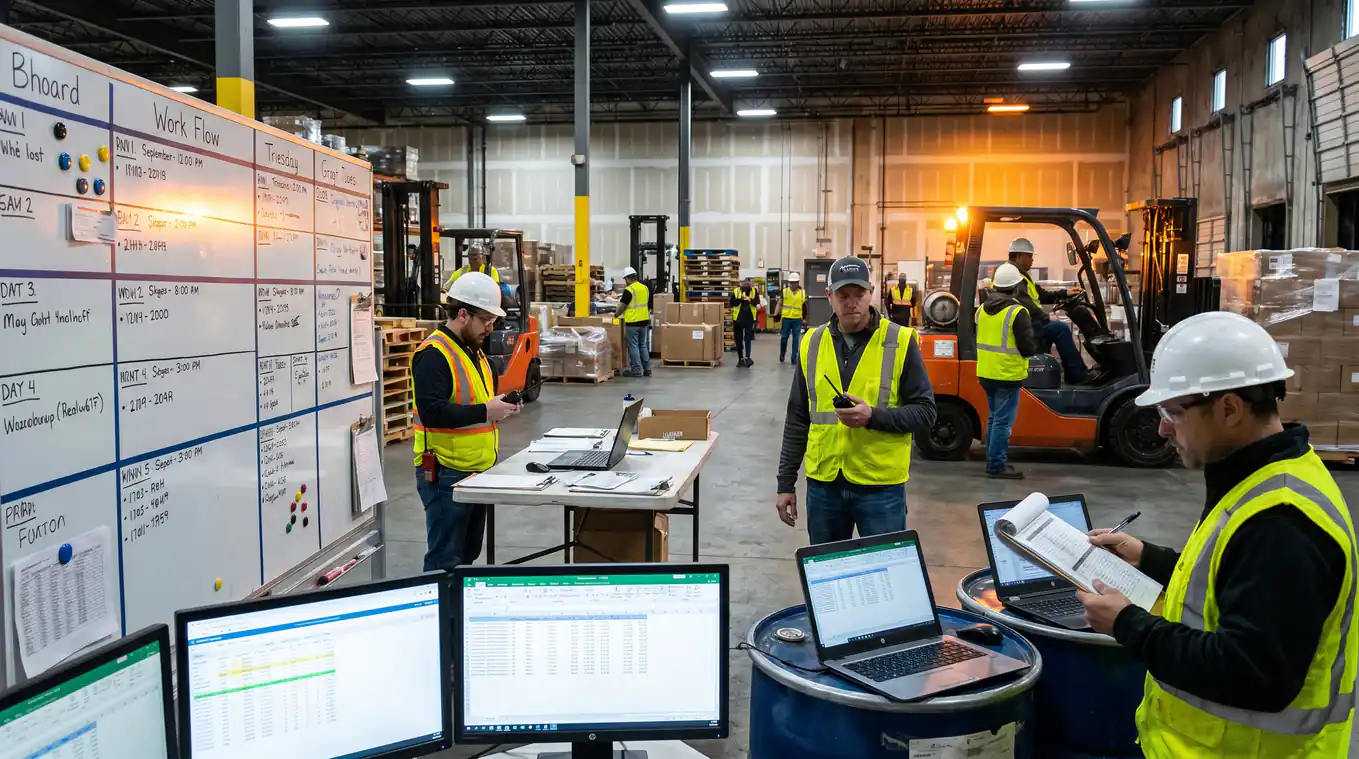
Busy logistics hub illustrating fragmented handoffs

Linehaul teams lived in publish cadences and command-centre views; dispatch lived in stop-level edits and live maps; inbound and outbound supervisors traded door, trap, and pull decisions hourly; billing and finance defended TTSL promises and P&R-built rates on spreadsheets when the movement record disagreed.

None of those groups were wrong in isolation—they were simply reading different timestamps for the same freight. The pain showed up as missed pull windows, double work on manifests, and invoices that needed rework after the trailer had already left.

What was breaking

  • Clock skew between LH and the yard: Trips could publish while outbound still planned against yesterday’s lane snapshot—drivers arrived for pulls that no longer matched the live LH board.
  • Field truth arriving late to dispatch: Stop edits, split routes, and seal updates sometimes lived only on the handheld channel until end of shift—dispatchers reran work the system could have carried automatically.
  • Dock scans disconnected from revenue: Strip manifests and outbound scans did not always land in BIL with the same PRO lineage customer operations quoted—finance chased proofs after the fact.
  • TTSL promises out of sync with execution: Matrices and holidays lived apart from the dispatch path, so service windows were defended in slides instead of inside the trip that actually moved.

Four handoffs, one movement record

ideyaLabs and AiLabs Agents treated the problem as a choreography problem—not a feature list. Each sprint hardened how LH publish events, DIS route changes, dock scans, and BIL triggers referenced the same identifiers, effective times, and seal lineage so revenue could follow the trailer instead of chasing it.

01

Publish discipline (LH)

AiLabs Agents · schedule integrity

AiLabs Agents helped harden weekly master templates, publish gates, bulk publish validation, and command-centre readbacks so “first published” still means what the dock and carrier see at load time.

02

Field execution (DIS)

AiLabs Agents · live coordination

Map boards, stop lifecycles, and mobile capture were tied to the same trip keys as LH—AiLabs Agents accelerated contract tests and event wiring so reroutes and seal changes surfaced without waiting for nightly extracts.

03

Dock alignment (IB / OB)

AiLabs Agents · trap & door truth

Trap planning, merge/lock semantics, strip manifests, and scan-unload-load steps were anchored to the LH booking the yard was executing—reducing cube and seal mismatches before trailers rolled.

04

Settlement readiness (BIL · TTSL · P&R)

AiLabs Agents · revenue guardrails

Bill triggers, TTSL matrices, alternate load point recalcs, and P&R-fed rates were checked against the same movement record—fewer “bill without move” or “move without rate” exceptions.

Instrumentation that survives the shift change

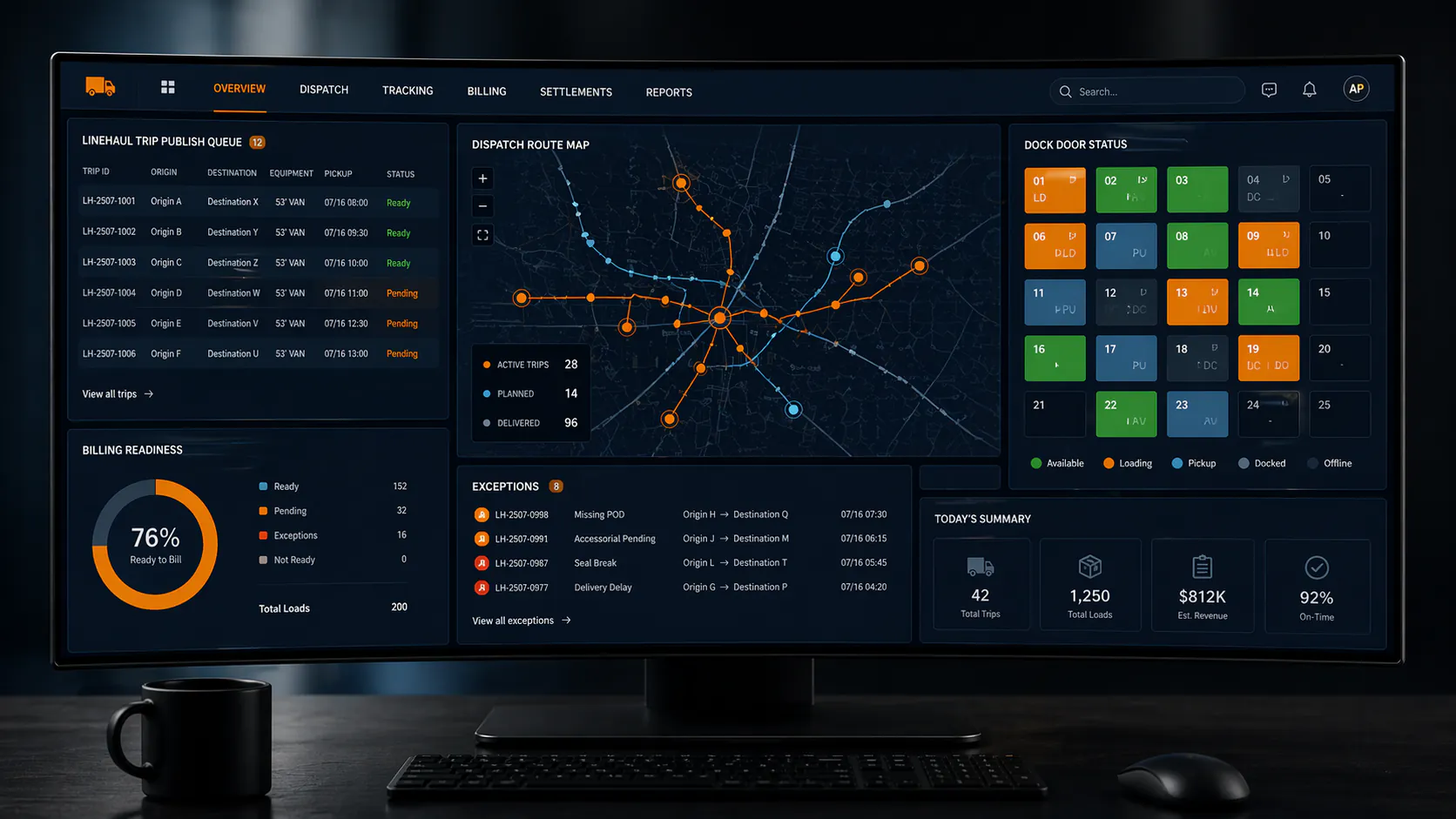
Operations dashboard for trips, docks, and billing readiness

The team shipped observability where it mattered: publish diffs, dispatch deltas, dock scan latency, and BIL queue aging on one operations wall. AiLabs Agents helped author runbooks, synthetic trip fixtures, and contract tests so regressions surfaced before planners opened the board for the day—especially around ad hoc LH moves and OB pull swaps that used to surprise billing overnight.

Metrics that matter

Operations leadership reviewing network performance

AiLabs Agents and ideyaLabs focused on outcomes that show up on the floor and in finance: fewer bridges between systems, faster publish-to-yard alignment, and cleaner first-pass billing.

60%

Fewer status bridges

LH, DIS, and yard leads spent less time reconciling three versions of the same trip because publish and door state converged faster.

Publish-to-yard speed

Carriers and dock supervisors consumed the same ordered trip list within minutes of publish instead of after manual re-entry.

35%

Less billing rework

BIL teams reopened fewer tickets once scans, accessorial intent, and TTSL context arrived with the first invoice draft.

Ready to tighten your publish-to-invoice path?

Engage ideyaLabs with AiLabs Agents to modernise linehaul, dispatch, dock, and billing integrations without losing operational nuance.

Talk to our team