
QA Agent — AI-Powered Automated Testing for Enterprise QA Teams

The Autonomous Testing QA Agent for Enterprise Quality Assurance & Validation

A QA Agent is an autonomous testing engine designed to automate the entire QA process and software testing lifecycle. Developed by ideyaLabs as part of the AiLabs platform, this QA Agent translates requirements into test plans and helps generate test cases as executable test scripts. It performs parallel execution, automates bug tracking, triggers regression in CI/CD pipelines, and supports self-healing scripts—reducing manual QA setup by 80%.

Book QA Agent Demo

QA Agent at a Glance

Key specifications and capabilities of the QA Agent by ideyaLabs AiLabs
Product NameQA Agent
PlatformAiLabs by ideyaLabs
CategoryAutonomous Testing & Automated QA
Primary CapabilityTesting Agent — Requirement Analysis, Test Generation & Execution
Workflow PhasesQA Process — Design, Data, Execution, Reporting, Regression
Core OperationsAgents Run Parallel Tests, Self-Healing Scripts, CI/CD Integration
IntegrationsJira, GitHub, Azure, AWS, CI/CD Pipelines
ImpactAgents improve release speed with zero compromise on software quality.

QA Agent Overview — How It Works
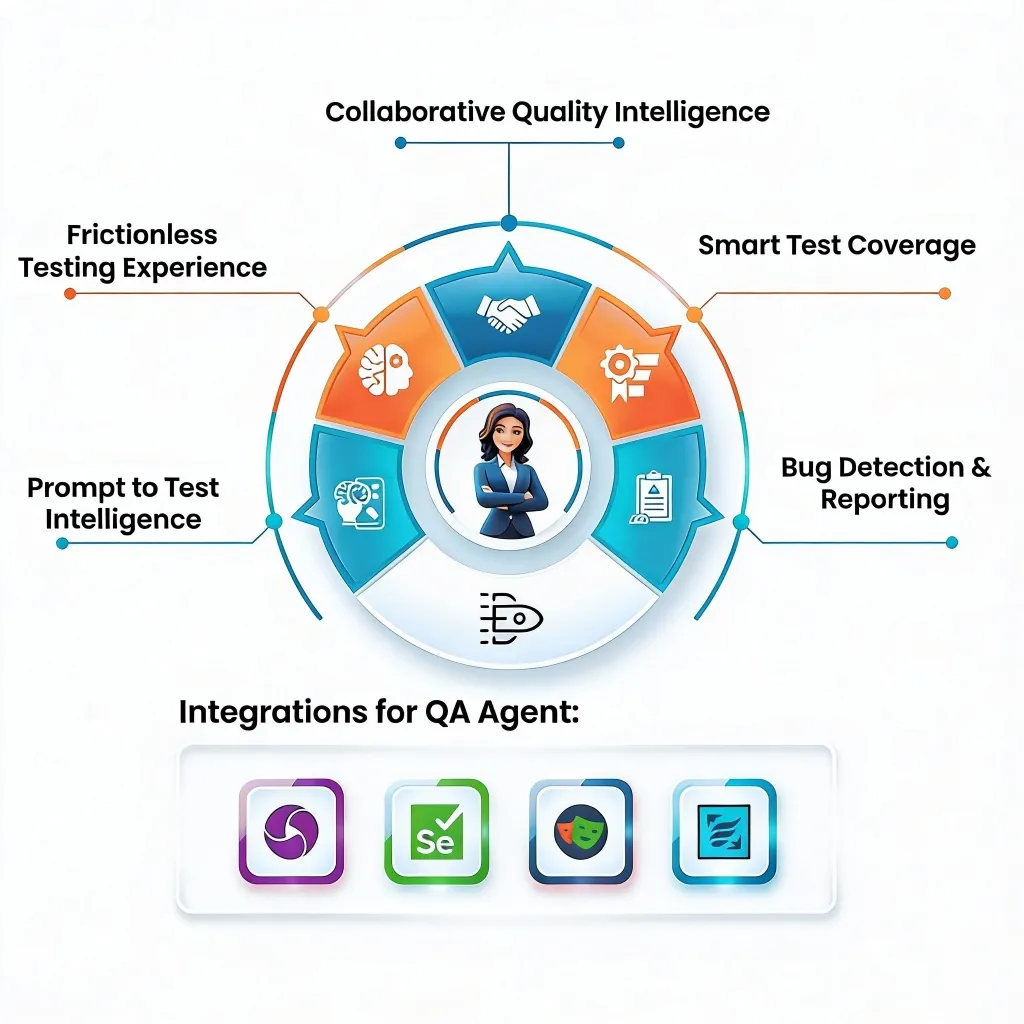
QA Agent overview — autonomous quality intelligence by ideyaLabs AiLabs

What the QA Agent Does

The QA Agent is a core part of the ideyaLabs AiLabs platform — an autonomous testing engine that automates requirement analysis, test case generation, test execution, and bug tracking. QA engineers use it to run tests, manage test data, and scale test automation with broader test coverage across the full software testing lifecycle.

From Test Design to Release, Seamlessly
Translates Requirements to Test Cases
Interactive Test Execution
Automated Testing & Validation
Continuous Quality Intelligence
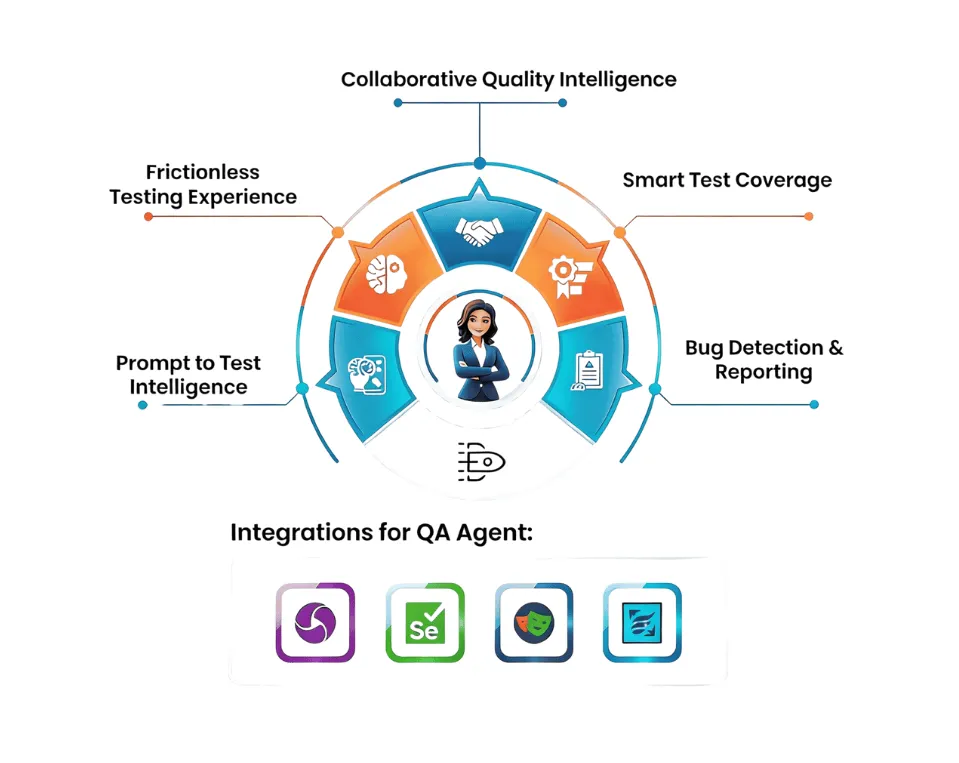
QA Agent architecture — smart test coverage, bug detection and reporting integrations by ideyaLabs

QA Agent Transforms Rigorous Validation into Unwavering Confidence for Every Release

QA Agent test automation — intelligent validation engine by ideyaLabs

Redefining Quality Through Intelligent Automation

Instantly Transform Requirements into Action

AI-driven parsing of requirements into test scripts for immediate execution, slashing setup time by 80%.

Rigorous Validation for Every Scenario

Comprehensive coverage ensuring no scenario is missed during testing cycles, from happy paths to chaos engineering.

Closed-Loop Defect Resolution

Automated reporting and fix verification cycles for faster release confidence, keeping your dev loop tight and efficient.

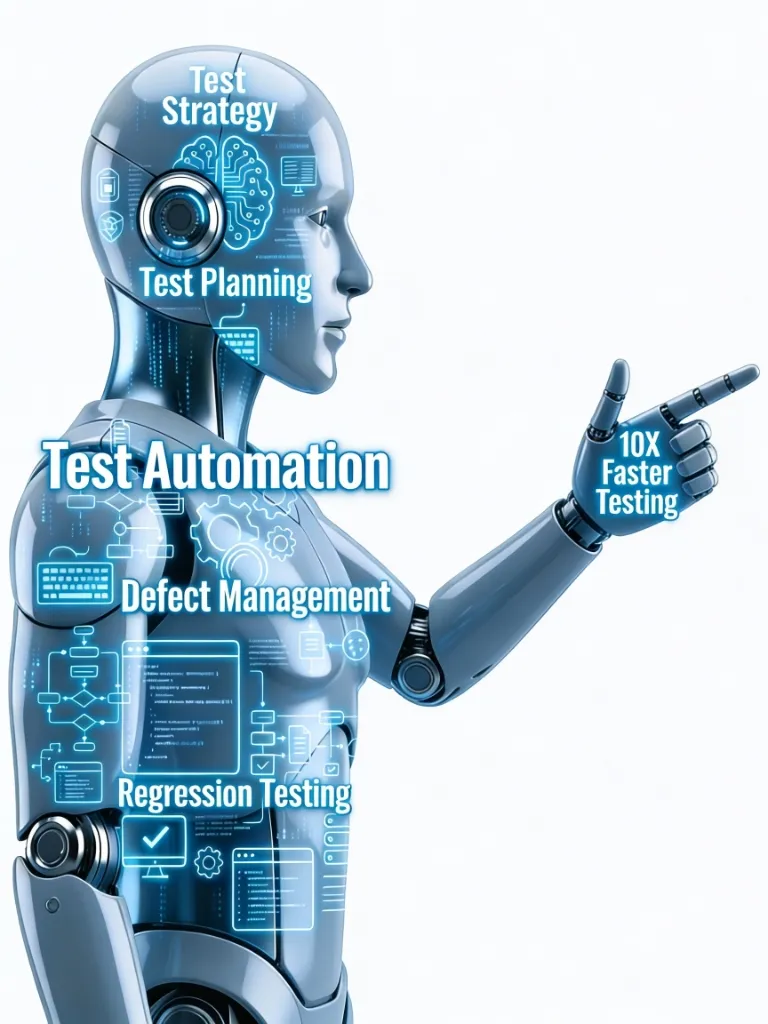
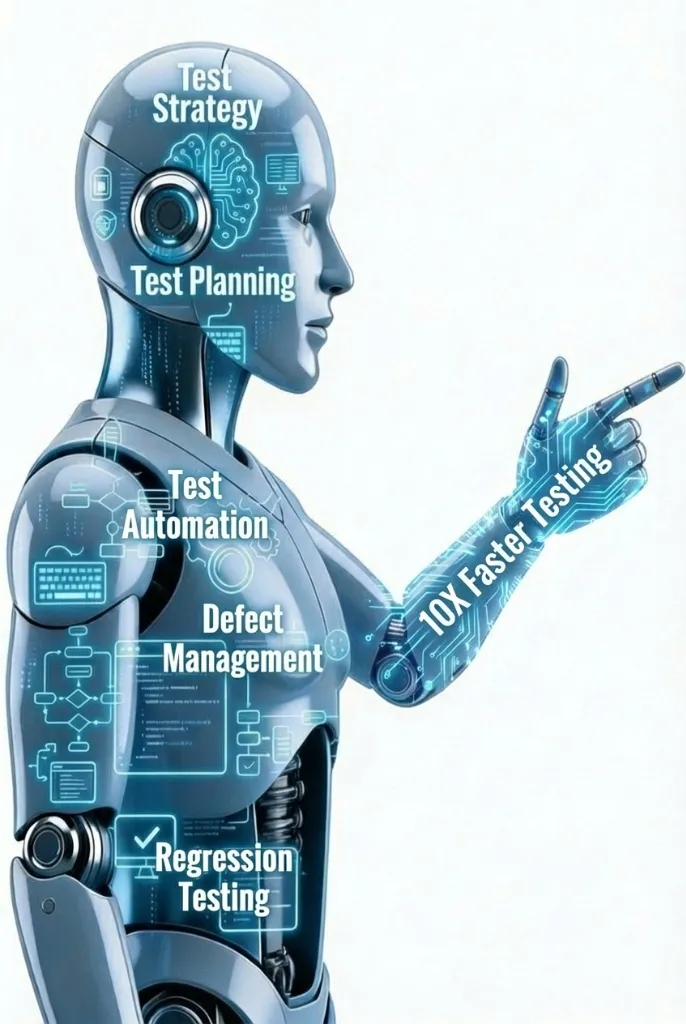
QA Agent validation — test strategy, test planning, and test automation by ideyaLabs
QA EXCELLENCE

QA Agent Transforms Rigorous Validation into Unwavering Confidence for Every Release

The ideyaLabs QA Agent delivers autonomous quality assurance by translating business requirements directly into executable test scripts. It enforces compliance standards, runs multi-thread parallel test runs, and integrates seamlessly into CI/CD pipelines—giving QA engineers broader test coverage while reducing manual setup effort by 80%.

Redefining Quality Through Intelligent Automation

Instantly Transform Requirements into Action

AI-driven parsing of requirements into test scripts for immediate execution, slashing setup time by 80%.

Rigorous Validation for Every Scenario

Comprehensive coverage ensuring no scenario is missed during testing cycles, from happy paths to chaos engineering.

Closed-Loop Defect Resolution

Automated reporting and fix verification cycles for faster release confidence, keeping your dev loop tight and efficient.

QA Agent: Frequently Asked Questions

Common questions about the QA Agent — the autonomous quality intelligence engine within AiLabs by ideyaLabs.

What is the QA Agent and its role in AiLabs?

The QA Agent is an autonomous software testing engine built by ideyaLabs for the AiLabs testing platform. As a core agent in the AiLabs suite, it acts as a specialized AI test agent and testing agent that helps QA teams move faster without sacrificing software quality. Unlike generic AI assistants or standalone AI tools, this QA testing agent understands your product context. The agent uses business requirements, acceptance criteria, and source code signals to plan test coverage, generate test cases, and run tests — so QA engineers spend less time on repetitive setup and more time on strategy. Within AiLabs, the QA Agent works alongside other specialized agents as part of a broader agentic automation layer for product delivery.

How does the QA Agent automate the testing workflow?

The QA Agent automates the full QA process through a structured testing workflow in three phases: 1. Requirement Analysis — The testing agent reads specs, user stories, and prompts to define validation boundaries. The agent takes scope from product intent so every test maps to a real business rule. 2. Test Suite & Case Generation — Using generative AI, the agent produces suites for functional paths, boundary conditions, and negative scenarios. AI agents to create structured test scripts and test code faster than manual test creation. 3. Execution & Bug Tracking — Agents run suites in parallel across scheduled test runs. Results log into test management tools like Jira, and agents handle defect routing, re-runs, and fix verification. This testing process replaces handoffs between planning, scripting, and execution — keeping testing tasks on schedule.

What types of testing can the QA Agent perform?

The QA testing agent supports a wide range of validation types across the software testing lifecycle: • Functional testing — validates features against requirements and acceptance criteria • Exploratory testing — probes unexpected user paths and boundary scenarios • UI testing — checks layouts, flows, and interaction behaviour • API testing — validates endpoints, payloads, and integrations with API automation support • E2E testing — runs full user journeys across frontend and backend • Regression testing — re-runs suites on every build to catch breaking changes Whether you need automated testing for sprint releases or autonomous testing across nightly builds, the QA Agent scales test coverage beyond what traditional testing teams can maintain by hand.

Does the QA Agent integrate with test management and bug tracking tools?

Yes. The QA Agent integrates natively with test management platforms, CI/CD pipelines, and defect trackers such as Jira and GitHub. When a test fails, the agent detects the issue, captures execution logs and screenshots, and files a detailed ticket with expected vs actual results. Agents act on status changes too — when a fix lands, the agent works through re-verification automatically. Teams use the AiLabs testing platform as a single layer for test automation, defect routing, and release readiness — without switching between disconnected automation scripts and manual trackers.

How does AI test case generation work in the QA Agent?

Test case generation is powered by generative AI and prompt-driven inputs. Use AI to turn requirements, user stories, or natural-language prompts into structured cases — covering happy paths, negative flows, and boundary limits. The agent reasons about what to validate, then agents make decisions on coverage depth. It also synthesizes realistic test data — privacy-compliant mock datasets for standard scenarios and stress conditions — so teams are not blocked waiting on production-like inputs. This helps teams generate test cases in minutes, reducing manual test creation while keeping QA tasks traceable to business rules.

Can the AI test agent run API testing and parallel execution?

Yes. The AI test agent supports API automation at scale and multi-threaded parallel execution across UI and backend layers simultaneously. Teams can run tests on every commit — test runs complete in minutes and give developers rapid feedback. Test code and automation scripts are generated, maintained, and re-executed automatically, so teams avoid the maintenance burden of traditional automation that breaks when UIs shift. For organizations pursuing automated QA at speed, parallel test automation means every test in the regression suite can run on demand — not just a priority subset.

How does agentic automation differ from traditional QA automation?

Traditional automation relies on static scripts tied to fixed selectors and click paths. When the UI changes, scripts break — and QA teams spend cycles fixing automation scripts instead of widening coverage. Agentic automation and agentic testing work differently. The QA Agent understands intent, self-heals when layouts shift, and agents know when to escalate unusual failures to humans. Drawing on intelligent agents design — from simple reflex agents to goal-based agents and learning agents — the agent reasons about context rather than blindly replaying steps. The result: broader test coverage, fewer false positives, and agents improve reliability with each release — outpacing rigid traditional automation approaches.

How does the agent work — and when should QA teams use AI?

Here is how the agent works end to end: 1. Ingest requirements and source code context 2. Plan coverage and generate test cases 3. Execute UI, integration, and E2E testing in parallel 4. Agent detects failures and logs defects 5. Re-run tests and verify fixes until the suite passes Agents handle repetitive testing tasks; lead QA and QA engineers review coverage, approve releases, and steer strategy. QA teams should use AI when manual test creation slows delivery, regression suites are hard to maintain, or AI in QA is needed to scale software quality without adding headcount. AI automation and AI agents support your team — they do not replace expert judgment on what ships.

Stop Testing Manually. Start Using the QA Agent.

The future of software quality is autonomous. Don't let manual testing bottlenecks define your release cycle — let the QA Agent handle validation at machine speed.

Schedule your technical demo with ideyaLabs today and experience the power of the QA Agent within AiLabs.

Book Demo