Data contracts and integration hardening
ideyaLabs implemented governed connectors and validation layers so nightly feeds and incremental updates stayed explainable and recoverable when upstream formats shifted.

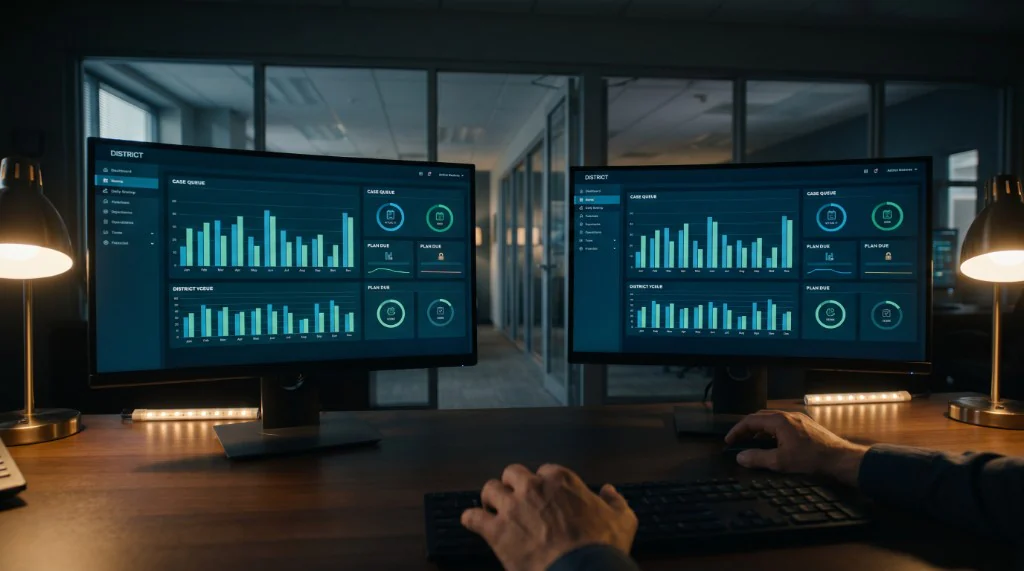
A district needed intervention operations to be measurable and repeatable—not dependent on scattered spreadsheets and manual follow-ups. ideyaLabs delivered custom software development with AiLabs Agents to unify signals, workflows, and reporting while keeping governance, privacy, and auditability first.
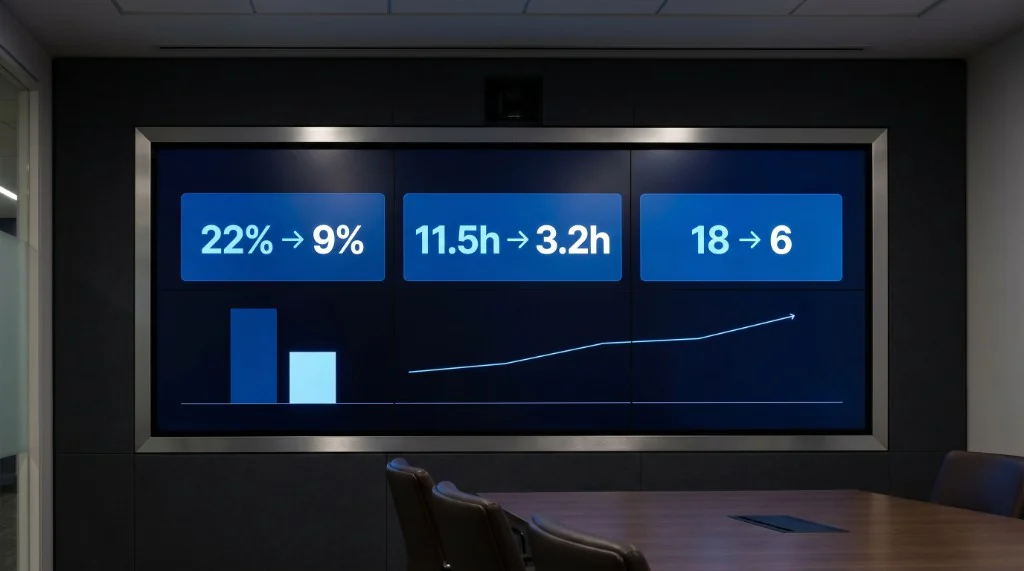
22% → 9%
Flagged learners without a documented plan after 14 days
Workflow software plus weekly operational reviews tightened ownership across teams and reduced “open loop” cases.
11.5h → 3.2h
Median monthly staff time on cross-system reporting
Normalized exports, repeatable templates, and governed transformations cut spreadsheet rework for the tracked reporting bundle.
18 → 6
Median days to first coordinated touch after a tier change
Routing rules and shared queues made responsibilities explicit while preserving required approvals for sensitive escalations.


Teams could see problems early, but turning signals into a documented plan—owned by the right adults, on a predictable timeline—was harder than it should be. The district wanted software that reduced operational drag without lowering the bar for responsible decision-making.
ideyaLabs treated the effort as product engineering: integrations, workflow modeling, permissions, testing, and operational visibility—delivered as a system districts can extend as policies evolve.
ideyaLabs applied AiLabs Agents across requirements synthesis, integration design, implementation, and quality engineering. The result was a governed platform: explicit roles, auditable changes, and automation that accelerated the boring parts while keeping humans accountable for judgment calls.
ideyaLabs implemented governed connectors and validation layers so nightly feeds and incremental updates stayed explainable and recoverable when upstream formats shifted.
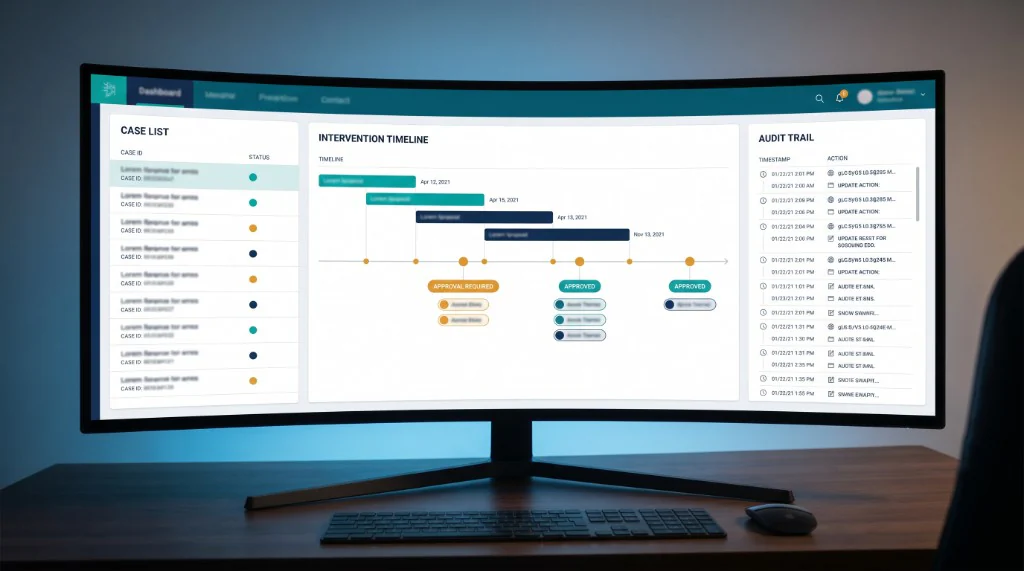
Cases, tiers, tasks, and SLAs were modeled explicitly so routing, escalations, and reassignment stayed traceable across the school year.
Role-specific views highlighted backlog aging, plan quality gaps, and workload balance—without exposing unnecessary detail to the wrong roles.
Agents suggested plan language and next-step checklists, but publishing required explicit sign-off from authorized staff on the configured policy path.
Synthetic scenarios and regression suites reduced release risk during peak windows like grading periods and enrollment transitions.
Monitoring, alerting, and operational playbooks made it easier for internal IT to support the platform as a long-lived system—not a one-off project.

Leaders could see where work stalled: aging cases, teams out of balance, and process steps skipped. Coaches spent less time reconstructing context and more time supporting learners—because the software preserved a coherent case record end-to-end.

Outcomes were tracked as operational reality: faster loop closure, less duplicate work, and dependable uptime during the terms when teams could least afford surprises.
2.9×
More intervention cases closed per coordinator week
Measured after workflow consolidation and assistive drafting for the standard case mix in the pilot cohort.
−44%
Duplicate documentation touches per case
Fewer repeated notes and attachments reduced rework while keeping an auditable history of decisions.
99.9%
Core service availability during tracked terms
Resilience work, retries, and capacity planning kept the intervention workspace dependable during peak usage.
Partner with ideyaLabs and AiLabs Agents to build governed education software, integrate safely with your approved systems, and prove impact with measurable operational metrics.
Talk to our team