01
Skills model and learning graph
AiLabs Agents · platform engineering
ideyaLabs implemented a versioned skills representation and mapping workflows so learning paths could stay aligned as roles changed.


A global organization needed workforce learning to behave like a product: dependable assignments, credible skills signals, and audit-friendly completion evidence. ideyaLabs delivered custom software development with AiLabs Agents—from integrations and workflow engines to governed assistive operations and production hardening.
58% → 91%
Mandatory learning path completion in the first assignment window
Clear assignments, reminders, and manager visibility reduced “deadline drift” for the tracked compliance catalog.
12.4w → 8.1w
Median weeks to role-ready proficiency (target role family)
Measured with skills assessments and manager sign-off criteria aligned to the same rubric before and after rollout.
27 → 11
Median hours per month spent on manual completion reconciliation
Automated evidence capture, exception queues, and exportable audit packages reduced operational rework for HR partners.
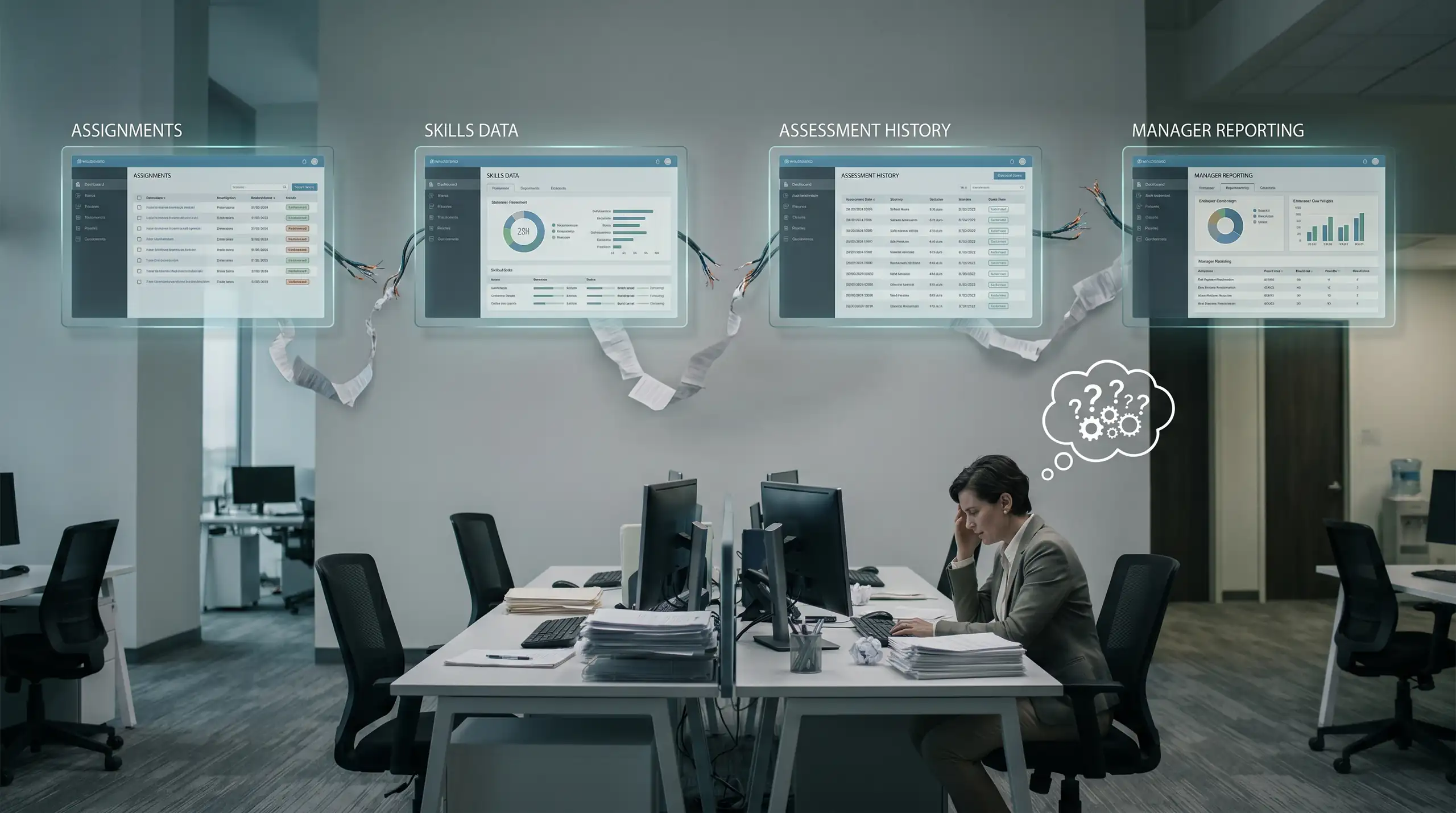
Teams were buying productivity with manual effort: reconciling completions, rebuilding spreadsheets, and chasing exceptions across regions. Managers lacked a trustworthy view of proficiency—so training investments were hard to defend with evidence.
The organization wanted software that connected learning to real role outcomes, reduced operational drag, and stayed governable as policies and catalogs evolved.
ideyaLabs applied AiLabs Agents across requirements synthesis, data modeling, implementation, and quality engineering. The platform treated assignments, evidence, skills signals, and audits as first-class objects—so automation could accelerate work without hiding accountability.
ideyaLabs implemented a versioned skills representation and mapping workflows so learning paths could stay aligned as roles changed.
Governed connectors normalized people, role, and completion signals with validation, retries, and reconciliation reports operators could trust.
Campaigns, cohorts, escalations, and exceptions were modeled explicitly—reducing ambiguity about who owes what by when.
Agents accelerated drafting, tagging, and QA checklists for learning assets, while publishing remained controlled by policy owners.
Dashboards connected completion, proficiency movement, and operational throughput to decisions about curriculum investment.
Load testing, access reviews, and staged rollouts reduced risk during global launches and peak enrollment-like windows.

HR partners spent less time reconciling truth. Managers could see progress in language that matched hiring and promotion decisions—while engineering teams retained APIs and tests that made change safer over time.

Outcomes were tracked as operational and workforce truth: faster readiness, fewer assignment errors, and dependable uptime when the business needed completions to land on time.
1.8×
More active learners supported per administrator (same service window)
Measured after assignment automation, cleaner role resolution, and fewer manual reconciliation loops in operations.
−29%
Support tickets related to “wrong assignment / wrong role”
Driven by cleaner role resolution and clearer learner-facing task states after integration hardening.
99.92%
Core service availability during tracked quarters
Operational monitoring and capacity planning kept the learning workspace stable during peak completion periods.
Partner with ideyaLabs and AiLabs Agents to ship skills-aware platforms, integrate with your approved internal systems, and prove ROI with measurable operational metrics.
Talk to our team