ideyaLabs LogoideyaLabs LogoideyaLabs Logo
Logistics network control room with route and fleet visibility
Case study

One integrated platform for logistics operations

A major transportation network unified LH linehaul, DIS dispatch (WebApp + Flutter driver app), inbound and outbound dock operations, BIL billing, TTSL service levels, CS customer operations, and P&R pricing—retiring legacy TMS silos for one operational spine. AiLabs Agents from ideyaLabs accelerated specs, integrations (mapping, mobile, and cloud-native delivery), tests, and rollout.

45%

Fewer manual handoffs

After LH master schedules, DIS dispatch boards, and IB/OB dock plans shared one shipment record instead of parallel spreadsheets.

Faster trip visibility

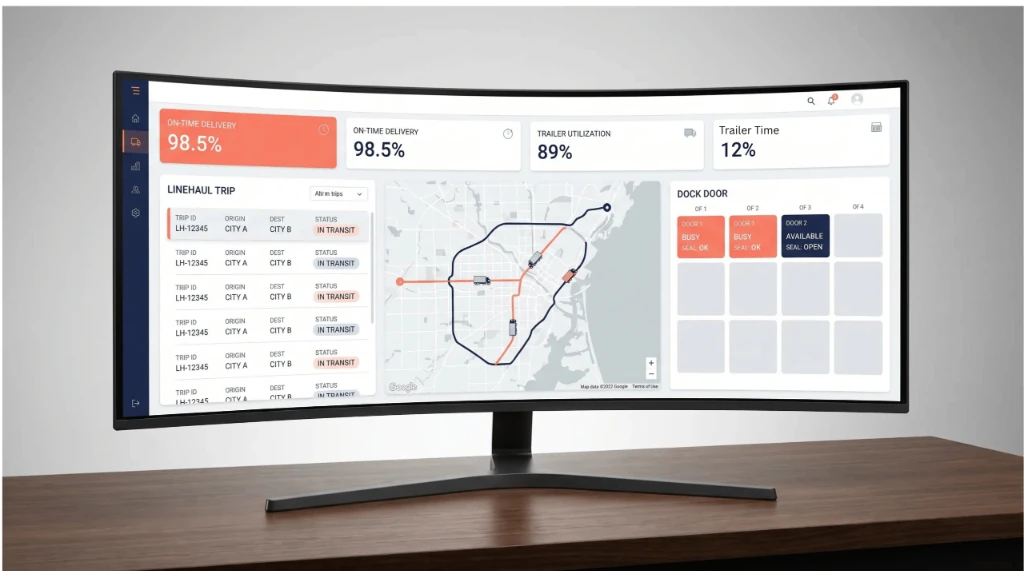
Command-centre trips, seals, and load boards updated in near real time for planners and carriers—vs. phone trees and static exports.

8

Core modules unified

LH · DIS · Inbound OPS · Outbound OPS · BIL · TTSL · CS · P&R on one path: CS → P&R → DIS → IB → OB → LH → TTSL → BIL.

Slow, fragmented logistics operations across hubs

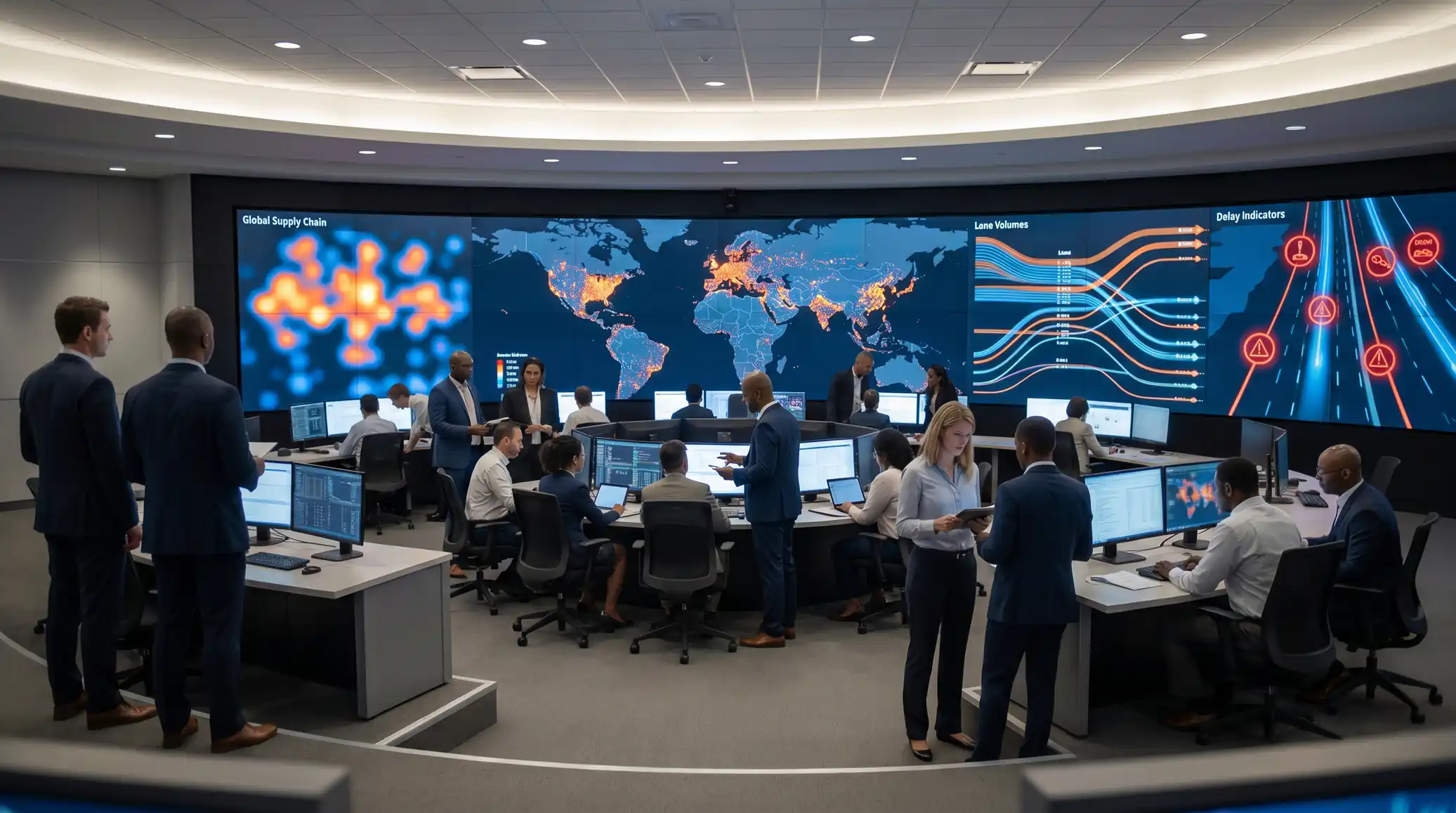
Logistics control environment with operations displays

Day to day, LH teams lived in weekly master schedules and publish validation; DIS ran map-based pickup & delivery on a separate driver channel; inbound OPS juggled doors, traps, and sequencing; outbound OPS aligned lanes, doors, and pulls to LH trips; BIL and TTSL sat downstream; CS and P&R had to stay aligned or revenue leaked before freight moved.

When those pieces stay disconnected, publication order stops guaranteeing load priority, strip manifests drift from what LH actually published, and BIL sees duplicate PROs or missing cross-border attributes after dispatch—pain that shows up across LH, DIS, IB, OB, BIL, TTSL, CS, and P&R.

Core roadblocks

  • Siloed LH / DIS / dock tooling: Weekly linehaul master schedules, map-based dispatch (WebApp + driver app), and inbound/outbound dock workflows lived in different stacks—teams re-keyed the same PRO, door, and pull data.
  • Limited real-time visibility: Supervisors could not see published trips, driver check-in, seal numbers, and service-centre buckets in one command-centre view.
  • Publish & load sequencing risk: Publication order was supposed to drive loading priority; without hard validation, missing trip details slipped through and trips published out of sequence.
  • Billing & TTSL disconnected from ops: BIL queues hit duplicate PROs, weak images, and cross-border gaps late; TTSL matrices and P&R rates were not always the same source dispatch and CS relied on.

How AiLabs Agents accelerate every layer of the logistics stack

ideyaLabs paired logistics SMEs with AiLabs Agents to ship eight interlocked areas as one product: LH schedules and command centre, DIS WebApp plus mobile mapping experiences, IB/OB dock orchestration, BIL lifecycle, TTSL matrices, CS flows (order entry, quick quote, pickups, shipment activity), and P&R as the shared rating spine for CS and BIL.

01

LH — Linehaul command & publish

AiLabs Agents · scheduling intelligence

Teams clone prior-week templates each cycle, adjust, then publish—the system blocks publish when trip data is incomplete. AiLabs Agents helped encode publication-order rules, load-board handoff, bulk trip publishing, ad hoc bookings through the carrier integration layer, and command-centre status with driver check-in and seals.

02

DIS — Dispatch & driver sync

AiLabs Agents · field coordination

Map-based board for stops, routes, live positions, street/satellite/traffic; assign, split, reschedule stops; route compare and mileage. Field crews use a cross-platform mobile app with embedded maps; AiLabs Agents supported infrastructure-as-code backend patterns so dispatcher and driver stay on one event stream.

03

Inbound OPS — dock & trap planning

AiLabs Agents · IB workflows

Inbound runs in three phases: pre-planning (doors, traps, appointments), active planning (planned traps, mapping-backed auto-sequencing, merge & lock routes), and execution monitoring—including urgent or critical freight and cross-dock timing with LH.

04

Outbound OPS — lanes, doors, pulls

AiLabs Agents · OB supervisor tools

Lanes (grouped destinations with reship), doors, pulls from LH, preset lanes vs. new direct pulls; strip / unload / trap manifests; scan-unload-load to destination trailers; cube, seal, and dispatch close-out aligned to LH bookings.

05

BIL — Billing & exceptions

AiLabs Agents · revenue integrity

Bill generation on deliver/dispatch, biller queues, partner and Mexico/Canada fields, duplicate or missing PRO paths, audit and change requests—wired so operational events upstream reduce revenue leakage.

06

TTSL — Transit time & SLA

AiLabs Agents · matrices & ALP

Junction matrices with bulk CSV, service holidays, EOL service centres, alternate load points with payable recalc, and user-visible logging—feeding load decision support and dispatch automation over time.

07

CS — Customer operations

AiLabs Agents · customer entry

Order entry, Quick Quote, pickup creation, pickup review queues, shipment activity, and claims read views—so customer operations shares identifiers with DIS and BIL instead of shadow spreadsheets.

08

P&R — Pricing & rating

AiLabs Agents · rate intelligence

Quick Quote vs. full rate quote, global vs. account-level rates, fuel and accessorial engines, and rules APIs—P&R feeds both BIL and CS, so AiLabs Agents helped keep rate data, quotes, and invoices aligned.


A logistics operations engine built for scale

Dashboard-style logistics and supply chain visibility

The delivery spine runs CS → P&R → DIS → Inbound OPS → Outbound OPS → LH → TTSL → BIL. AiLabs Agents helped encode nuances such as first-published trip loading order, seal capture on check-in, trap merge and lock semantics, strip manifests for dock workers, and carrier-side hooks for ad hoc LH bookings—so releases stayed faithful to hub operations while teams moved off legacy TMS workflows.

Metrics that matter

Operations team collaborating with live systems

AiLabs Agents and ideyaLabs delivery pods focused on measurable operations outcomes: fewer manual touches, faster visibility, and a traceable path from customer commitment to invoice.

45%

Fewer manual handoffs

LH publish gates, DIS boards, and IB/OB dock plans drew from the same shipment lifecycle instead of retyping across legacy TMS silos.

Faster operational visibility

Command-centre + service-centre bucket views meant trips, seals, cancellations, and reinstatements were visible without chasing spreadsheets.

100%

Traceable order-to-cash

CS + P&R quotes, DIS pickups, IB/OB execution, LH movement, TTSL promises, and BIL invoices referenced one spine of IDs and timestamps.

Ready to unify your logistics operations?

Engage ideyaLabs to design, build, and harden your next linehaul, dispatch, and dock platform—with AiLabs Agents embedded across product, integration, quality, and delivery.

Talk to our team