

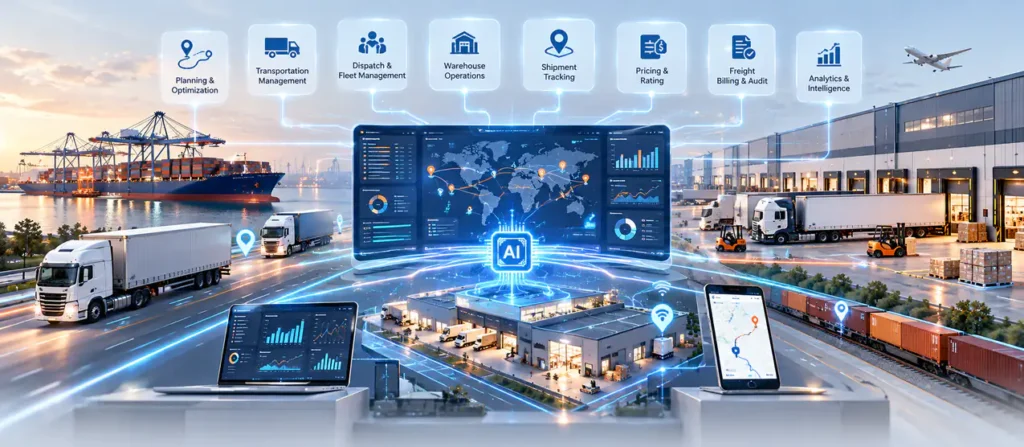
AI-Powered Logistics Software Development for Connected Transportation Operations
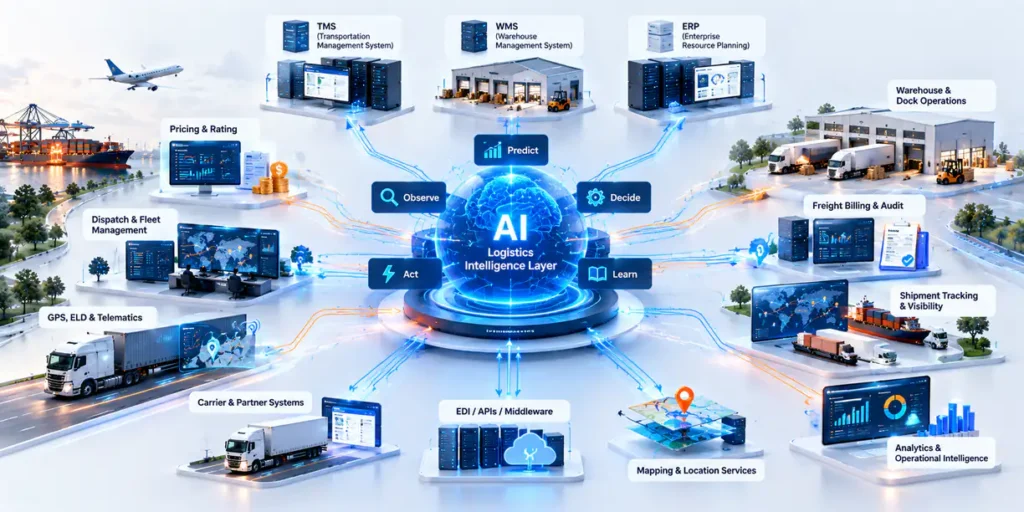
ideyaLabs is a logistics software development company building custom logistics software, transportation management platforms, and AI-powered solutions for modern freight and supply chain operations.
We develop and modernize software across linehaul planning, dispatch, fleet and load assignment, dock operations, transportation management, pricing and rating, billing, shipment visibility, warehouse operations, and back-office automation.
Our approach combines cloud-native software engineering with AiLabs Agents that can observe operational events, reason over business context, execute governed actions, and escalate exceptions when human approval is required.
From modernizing legacy transportation platforms to building new logistics management systems, ideyaLabs helps organizations create connected operational ecosystems that are easier to integrate, scale, monitor, and continuously improve.
Logistics Software Development Services
Custom Logistics Software Development for End-to-End Operations
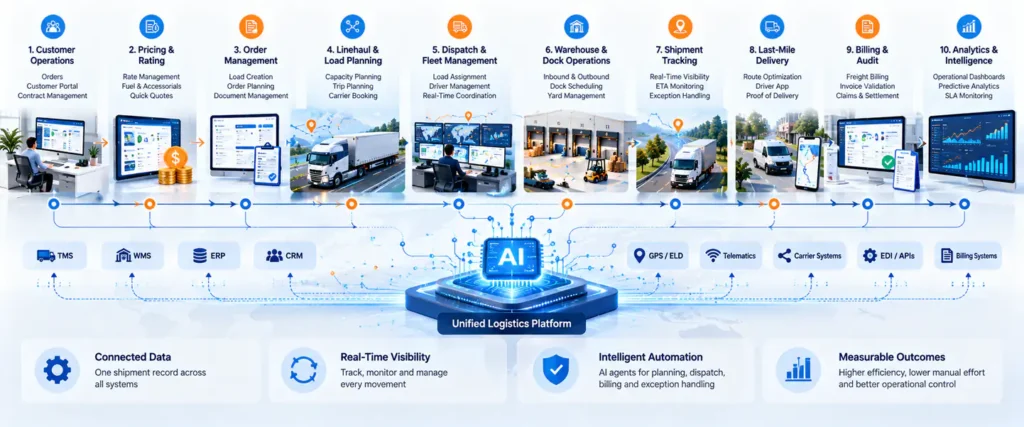
Modern logistics operations depend on connected systems that coordinate shipments, carriers, drivers, vehicles, warehouses, docks, rates, billing, and customers. ideyaLabs develops custom logistics management software that connects these workflows into integrated digital platforms.
Transportation Management Software
Build or modernize transportation management software for complex freight and transportation operations.
- Shipment planning and scheduling
- Load planning and management
- Trip management
- Carrier coordination
- Dispatch management
- Route optimization
- Shipment tracking
- Delivery scheduling
- Exception management
- Transportation visibility
Linehaul Management Software
Digitize linehaul operations with software designed for planning, publishing, execution, monitoring, and exception management.
- Master schedule management
- Trip planning
- Load-board management
- Capacity planning
- Carrier booking
- Trip publication
- ETA monitoring
- Delay detection
- Repower and reship workflows
- Linehaul operational visibility
Dispatch and Fleet Management Software
Connect dispatchers, drivers, vehicles, trailers, and shipments through integrated fleet management and dispatch software.
- Dispatch boards
- Driver applications
- Load assignment
- Fleet allocation
- Route management
- GPS and location tracking
- Driver notifications
- Exception handling
- Mileage and route comparison
Warehouse and Dock Operations Software
Build software for inbound and outbound logistics, dock scheduling, warehouse workflows, and yard coordination.
- Inbound planning
- Outbound planning
- Dock scheduling
- Door and lane management
- Load sequencing
- Cross-dock operations
- Scan, unload, and load workflows
- Yard coordination
Pricing and Rating Software
Automate freight pricing and rating workflows across customer rates, fuel, accessorials, quotes, and validation.
- Rate management
- Account-level rates
- Fuel calculations
- Accessorial charges
- Quick quotes
- Full freight quotes
- Pricing APIs
- Rating validation
Freight Billing and Back-Office Automation
Connect freight billing, audit, claims, accounting, customer service, and exception management workflows.
- Freight billing
- Billing audit
- Invoice validation
- Duplicate detection
- Claims workflows
- Accounting integration
- Customer service workflows
- Exception queues
- Revenue integrity
Last-Mile Delivery Software
Develop last-mile logistics software for delivery planning, route optimization, driver assignment, tracking, proof of delivery, and customer visibility.
- Delivery planning
- Route optimization
- Driver assignment
- Real-time tracking
- Proof of delivery
- Delivery exceptions
- Customer notifications
- ETA management
This is where ideyaLabs can differentiate itself strongly from conventional logistics software vendors. The current live Linehaul case study supports the agentic positioning with 13 agents across 5 domains and 1,500+ tickets analyzed.
Agentic AI for Logistics Operations
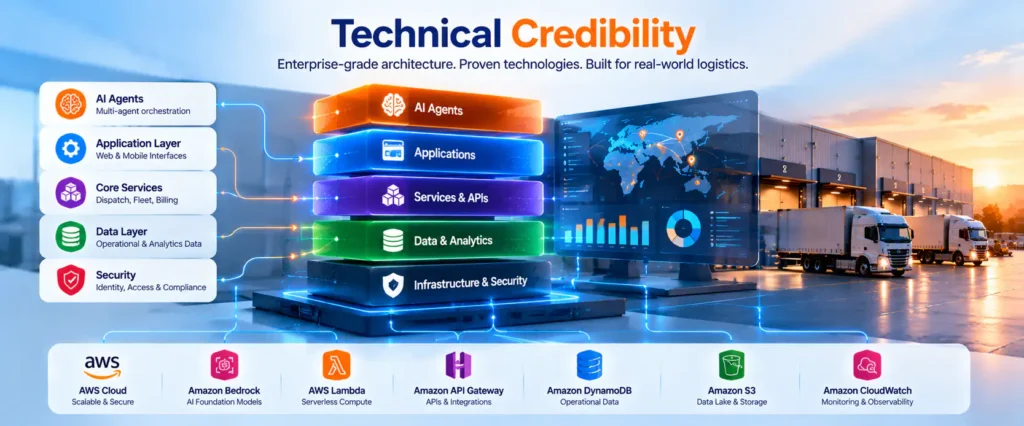
Traditional logistics automation generally executes predefined rules. Agentic AI can observe operational events, reason over context, determine the next action, execute approved actions, and escalate exceptions within defined governance boundaries.
ideyaLabs applies AiLabs Agents to transportation and logistics workflows rather than treating AI as a generic chatbot layer.
AI Linehaul Agent
- Trip monitoring
- ETA deviation detection
- Route behavior analysis
- Trip recovery
- Repower workflows
- Reship decisions
- Capacity planning
- Operational exception handling
AI Dispatch Agent
- Load assignment
- Driver and vehicle matching
- Dispatch coordination
- Route changes
- Delivery exceptions
- Real-time operational monitoring
AI Billing Audit Agent
- Rate validation
- M Code and L Code matching
- Invoice review
- Exception identification
- Automated resolution of clear matches
- Human escalation for ambiguous transactions
ideyaLabs describes this workflow as an observe → decide → act → confirm model for logistics AI agents.
Billing Audit & AI Assistant Agents
AI Pricing and Rating Agent
- Rate validation
- Fuel and accessorial logic
- Contract and rate-card analysis
- Quote assistance
- Pricing exceptions
AI Operations and Reporting Agents
- Operational reporting
- Status synchronization
- Exception monitoring
- Data validation
- Cross-system updates
- Management insights
AI Agent Orchestration
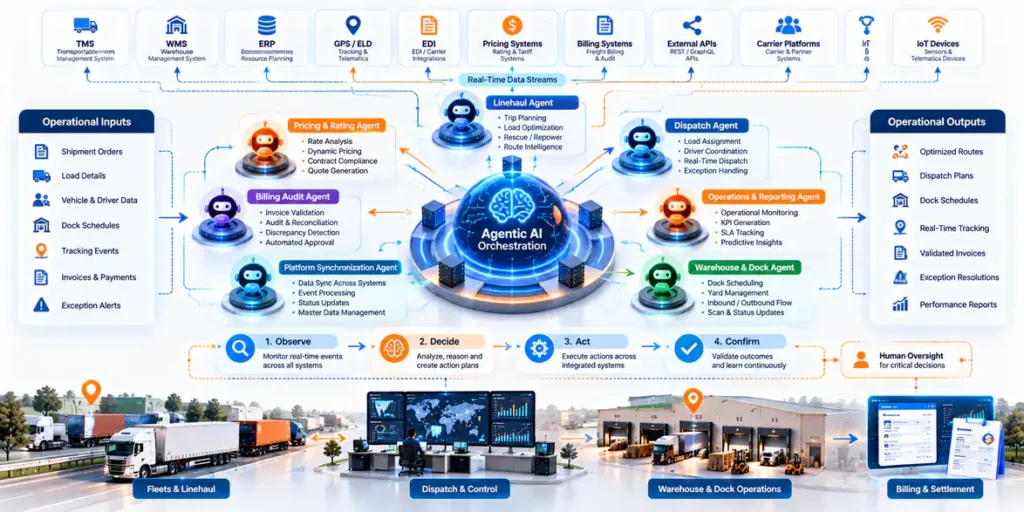
For larger transportation environments, multiple specialized agents can work across connected operational domains. The ideyaLabs Linehaul AI Agent Orchestration case study documents 13 operational agents across five domains, based on analysis of more than 1,500 implementation tickets.
AI Development Services
Logistics Software That Connects Your Entire Operational Lifecycle
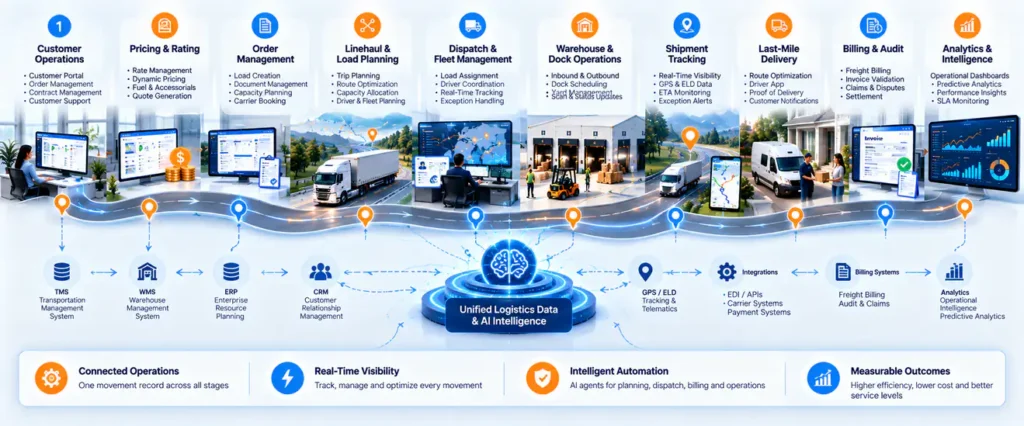
ideyaLabs connects logistics workflows across the operational lifecycle so teams can work from consistent shipment, trip, load, rate, and billing information.
Customer Operations → Pricing & Rating → Order Management → Linehaul & Load Planning → Dispatch & Fleet → Dock Operations → Shipment Tracking → Billing & Audit → Analytics & Operational Intelligence
Logistics Software Integrations
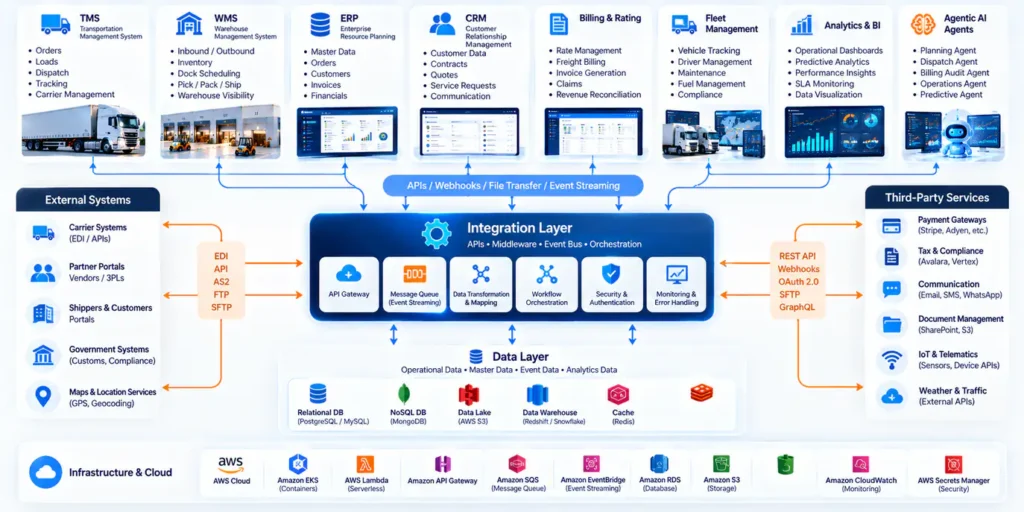
Enterprise logistics platforms depend on integration across transportation, warehouse, ERP, customer, carrier, tracking, and billing systems.
Enterprise Systems
- Transportation Management Systems (TMS)
- Warehouse Management Systems (WMS)
- Enterprise Resource Planning (ERP) systems
- Customer Relationship Management (CRM) platforms
- Freight rating systems
- Billing platforms
Transportation Integrations
- GPS
- Electronic Logging Devices (ELD)
- Telematics
- Fleet tracking
- Mapping platforms
- Carrier systems
- Driver applications
Integration Technologies
- REST APIs
- GraphQL
- EDI
- Webhooks
- Event-driven architecture
- API gateways
- Microservices
AI and Data Infrastructure
- Large Language Models
- Retrieval-Augmented Generation (RAG)
- Vector search
- Knowledge graphs
- Model Context Protocol (MCP)
- Machine learning
- Predictive analytics
- Real-time data pipelines
Real Logistics Software Case Studies
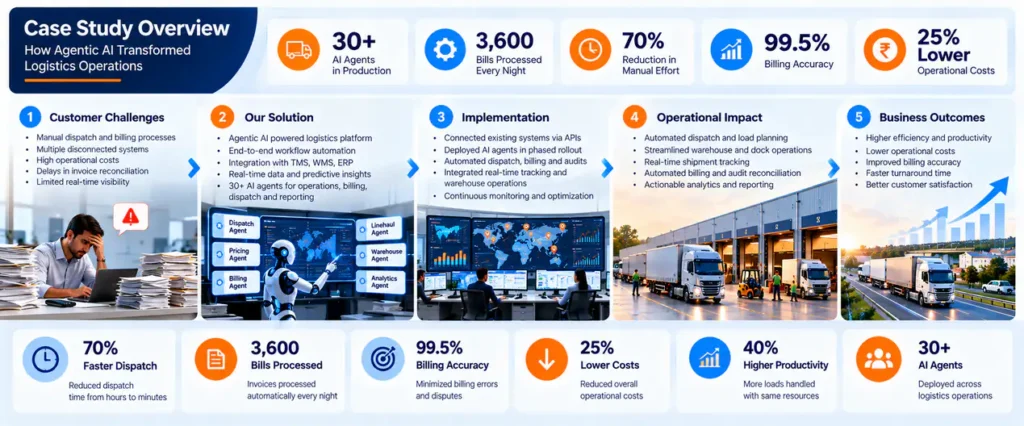
Explore real ideyaLabs logistics engineering work to understand how transportation software, cloud engineering, and AI agents can be applied to operational workflows.
Linehaul AI Agent Orchestration
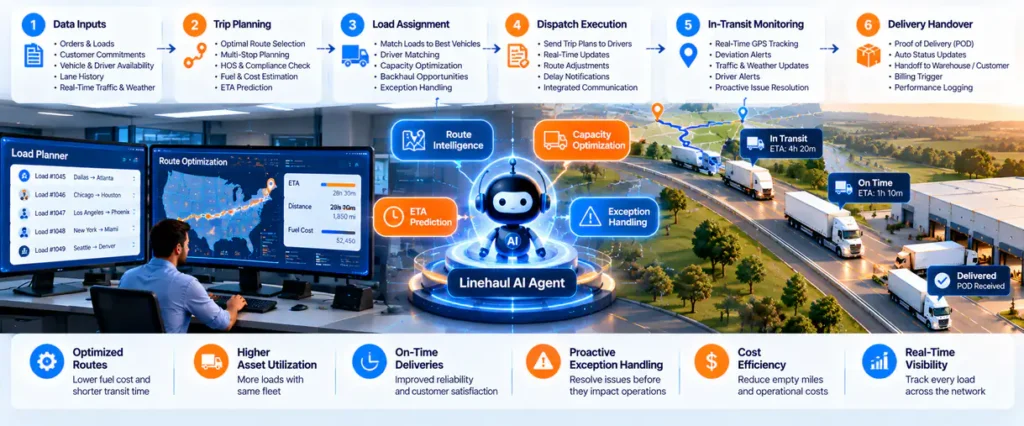
ideyaLabs designed an agent strategy covering trip operations, planning and cargo, billing, settings and rates, and platform orchestration. The program mapped 13 operational agents across five domains using evidence from more than 1,500 implementation tickets.
Read the Linehaul AI Agent Orchestration Case Study → /case-studies/logistics-linehaul-agent-orchestration/
Fleet and Load Assignment Automation
This case study focuses on modernizing coordination between contractors, drivers, trucks, trailers, and active loads. The engineering approach included Kubernetes, CI/CD automation, serverless APIs, infrastructure as code, real-time monitoring, and operational notifications.
Read the Fleet & Load Assignment Automation Case Study
Linehaul, Dispatch and Billing Handoffs

This case study addresses the operational handoff between linehaul publication, dispatch, yard and dock operations, billing, transit-time service levels, and pricing and rating.
Explore the Linehaul, Dispatch & Billing Case Study
Logistics Industries We Serve
Freight and Transportation
Custom TMS, dispatch, fleet, linehaul, freight management, and transportation visibility platforms.
3PL and Logistics Providers
Multi-client transportation, pricing, carrier, billing, and shipment visibility platforms.
Fleet and Carrier Operations
Fleet assignment, driver applications, telematics, dispatch, and carrier management systems.
Warehousing and Distribution
WMS, dock management, inventory, fulfillment, warehouse automation, and operational visibility.
Retail and Last-Mile Logistics
Delivery management, route optimization, tracking, customer visibility, and exception management.
Cold Chain Logistics
Temperature-sensitive shipment monitoring, exception management, and operational visibility.
Cargo, Port and Container Operations
Cargo movement, shipment tracking, container workflows, and connected logistics operations.
Supply Chain Operations
Planning, forecasting, visibility, analytics, and intelligent decision support.
Logistics Data, Analytics and Operational Intelligence
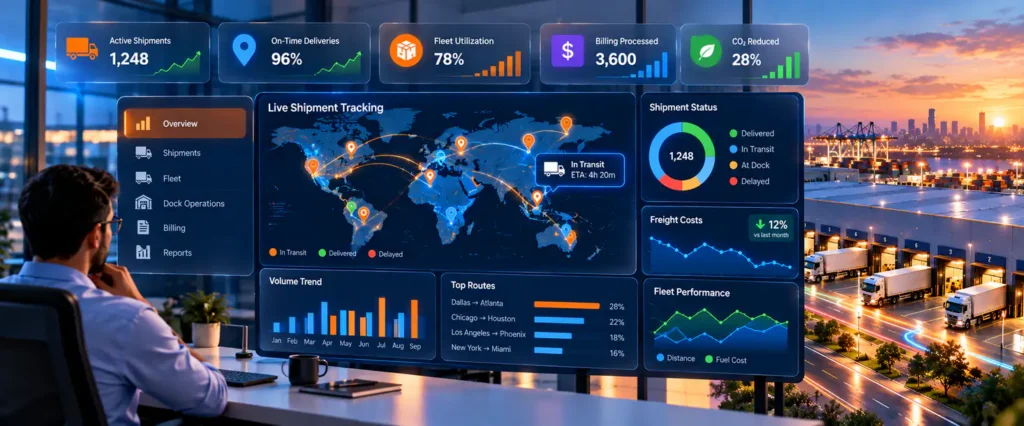
Logistics software generates large volumes of operational data. ideyaLabs connects that data to analytics and predictive intelligence for better planning, visibility, and decision support.
- Real-time logistics dashboards
- Fleet analytics
- Shipment analytics
- Operational KPI monitoring
- Demand forecasting
- Capacity forecasting
- Predictive analytics
- Exception analytics
- Route performance analysis
- SLA monitoring
- Supply chain visibility
- Business intelligence
Data Analytics Services
Cloud-Native Logistics Software Engineering
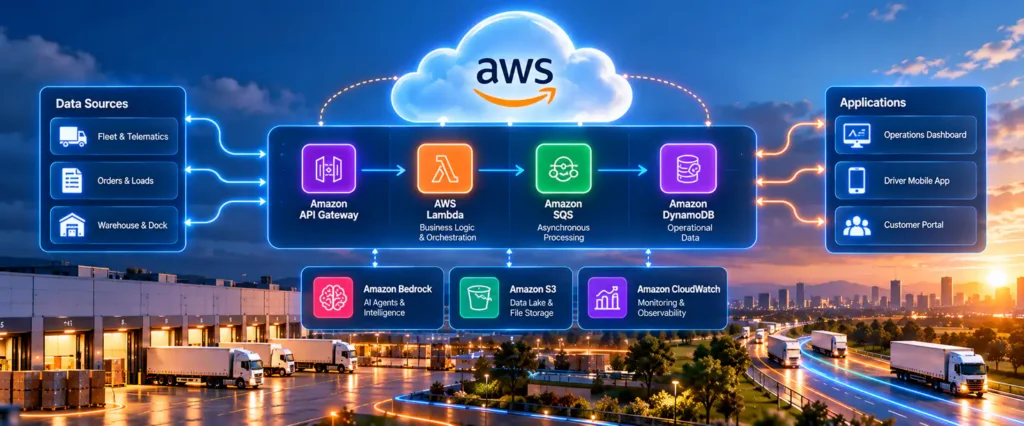
For enterprise logistics platforms, architecture determines how effectively the system can scale, integrate, and adapt to changing operational requirements.
- Cloud-native architecture
- Microservices
- REST and GraphQL APIs
- Kubernetes
- Serverless computing
- Infrastructure as Code
- CI/CD
- Observability
- Event-driven architecture
- Scalable data platforms
Cloud Application Development
Quality Engineering for Logistics Software
Transportation software has many integration points and operational dependencies. Quality engineering helps validate the reliability of critical logistics workflows.
- API testing
- Integration testing
- Regression testing
- Performance testing
- Security testing
- Mobile testing
- Web application testing
- CI/CD quality gates
- AI-assisted testing
Software Testing and Quality Assurance Services
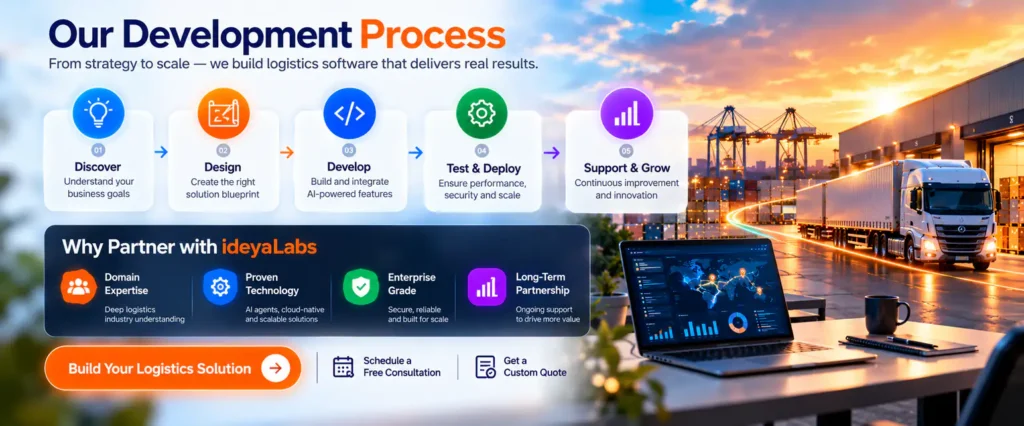
How We Develop Logistics Software
01 — Logistics Discovery and Workflow Analysis
We analyze the existing TMS, WMS, ERP, operational workflows, manual processes, integrations, data sources, exception patterns, and business rules.
02 — Solution Architecture
We design cloud architecture, APIs, microservices, data architecture, integration layers, AI-agent architecture, security, and governance.
03 — Product Engineering
We develop web applications, mobile applications, APIs, operational dashboards, AI-agent workflows, and integration services.
04 — Integration and Data Engineering
We connect TMS, WMS, ERP, GPS, ELD, telematics, mapping, carrier, billing, and other enterprise systems.
05 — Quality Engineering
We validate functional workflows, APIs, integrations, performance, security, mobile applications, and AI-agent behavior.
06 — Deployment and Observability
We implement CI/CD, infrastructure as code, monitoring, logging, alerting, and application performance monitoring.
07 — AI Optimization and Continuous Improvement
We monitor agent performance, operational exceptions, model behavior, integration health, and business outcomes to continuously improve the platform.
Why Choose ideyaLabs for Logistics Software Development?
Logistics Domain Workflows
Our logistics engineering work spans linehaul, dispatch, fleet assignment, dock operations, pricing, billing, customer operations, and transportation workflows.
Production-Oriented AI Agents for Logistics
The current ideyaLabs logistics offering describes more than 30 production agents and approximately 3,600 bills automated per night in high-scale transportation programs.
Evidence-Driven Agent Design
The Linehaul Agent Orchestration case study used more than 1,500 implementation tickets to identify and prioritize AI-agent opportunities.
Connected Operational Architecture
Our logistics solutions connect operational domains rather than treating individual workflows as isolated applications.
Enterprise Software Engineering
Cloud engineering, DevOps, quality engineering, analytics, AI, and application development can be combined into a unified logistics transformation program.
Security and Governance
Enterprise logistics platforms can be designed around security, access controls, auditability, integration governance, and applicable compliance requirements.
Logistics Software Development FAQs
What does a logistics software development company do?
A logistics software development company designs, develops, integrates, and modernizes software used to manage transportation, freight, fleet, warehouse, shipment, delivery, billing, and supply chain operations.
What types of logistics software does ideyaLabs develop?
ideyaLabs develops transportation management platforms, linehaul systems, dispatch and fleet software, warehouse and dock applications, pricing and rating systems, billing automation platforms, logistics portals, and AI-powered logistics solutions.
Can you develop custom TMS software?
Yes. Custom TMS development can include shipment planning, load management, dispatch, carrier management, tracking, route optimization, pricing, billing, analytics, and enterprise integrations.
Can AI agents be integrated into existing logistics systems?
Yes. AI agents can be connected to existing logistics platforms through APIs, events, and enterprise integration layers. They can support workflows such as trip monitoring, dispatch, billing audit, reporting, pricing, and exception management.
Can you integrate logistics software with TMS, WMS, and ERP systems?
Yes. Logistics platforms can be integrated with TMS, WMS, ERP, tracking, GPS, ELD, telematics, carrier, and billing systems through APIs, EDI, webhooks, and other integration mechanisms.
How long does logistics software development take?
The timeline depends on scope, integrations, workflow complexity, migration requirements, AI capabilities, testing requirements, and deployment architecture. A discovery and architecture assessment should be completed before providing a project estimate.
Can you modernize legacy logistics software?
Yes. Legacy logistics platforms can be modernized through API enablement, cloud migration, microservices, data modernization, UI modernization, integration engineering, and incremental replacement of legacy workflows.
What makes AI logistics software different from traditional automation?
Traditional automation generally follows predefined rules. AI-agent systems can interpret operational context, reason over available information, select actions within defined boundaries, execute governed actions, and escalate exceptions according to business rules.
Start Your Logistics Software Development Project
Whether you are modernizing a legacy TMS, building a transportation management platform, automating dispatch and billing, connecting logistics systems, or introducing AI agents into transportation operations, ideyaLabs can help design and engineer the solution.
Build connected, intelligent, and scalable logistics operations with ideyaLabs.
Talk to a Logistics Software Expert

Austin Reed is a technology and business writer specializing in Artificial Intelligence, Agentic AI, logistics technology, enterprise software, automation, and digital transformation. He writes about AI-powered software solutions, autonomous AI agents, logistics software, cloud technologies, data analytics, and emerging technology trends, providing practical insights into how organizations can use modern technologies to improve operational efficiency, decision-making, scalability, and business outcomes.
